

Sibiu Travel Guide: Plan a Trip That Actually Works
This Sibiu travel guide starts with one of the city’s biggest advantages: Sibiu is one of the easiest places in Transylvania to understand on foot. Its historic centre is compact enough to make a short city stay satisfying, but the real advantage is the combination: medieval squares and passages in the city, serious museums, a major open-air museum at Dumbrava, and several very different route options beyond Sibiu.
This Sibiu travel guide is built around the decisions that change a trip: what is worth your time, how many days make sense, which part of the old city works best as a base, how to arrive and move around, and when a destination outside Sibiu needs its own plan rather than being squeezed into the same day.
Sibiu was a European Capital of Culture in 2007, and culture is still part of how the city works rather than just a line in its history. The central squares regularly function as public spaces for events as well as sightseeing, so the atmosphere can change noticeably with the season and cultural calendar.
Is Sibiu worth visiting?
Yes — if you like historic cities that reward walking rather than rushing from one headline attraction to the next.
Sibiu works especially well for travelers who want a mix of architecture, museums, cafés, churches and easy street-level exploration. The old city is arranged across the Upper and Lower Town, with the main historic squares linked by passages, stairs and narrow streets. You can understand the centre without a car, then decide whether to spend more time inside the city or use Sibiu as a base for the surrounding region.
Best for: a first Transylvania trip, a compact city break, travelers who enjoy historic streets and museums, and anyone who wants one base with several very different onward options.
Less ideal if: you are treating Sibiu only as a quick photo stop between long drives. The city is compact, but its value comes from walking the Upper and Lower Town, choosing a few interiors that genuinely interest you, and leaving enough time for the atmosphere between them.
Why Sibiu works as a base: the city gives you a complete urban day even before you add an excursion. That means your day trips do not have to carry the entire trip — and you can be more selective about which routes are actually worth the travel burden.
How many days do you need in Sibiu?
There is no universal number, because the right stay depends on whether Sibiu is the destination or the base.
1 day — the historic core.
Use one day for the central squares, the Upper–Lower Town walking connection, the Bridge of Lies, the fortification area and a small number of interiors. Trying to visit every museum and church in a single day usually turns a walkable city into a checklist.
2 days — city plus depth.
A second day gives you room for the attraction that does not fit naturally into a quick old-town circuit: ASTRA Museum, deeper museum time, or a slower second pass through the historic centre.
3+ days — Sibiu as a base.
Once you have protected enough time for the city itself, extra days can support a regional route without forcing you to check out and move accommodation every morning. This is where the distinction between “possible from Sibiu” and “worth doing from Sibiu” starts to matter.
This is a duration framework, not a day-by-day itinerary. A dedicated Sibiu itinerary should own the exact ordering once that resource exists.
What to see and do in Sibiu
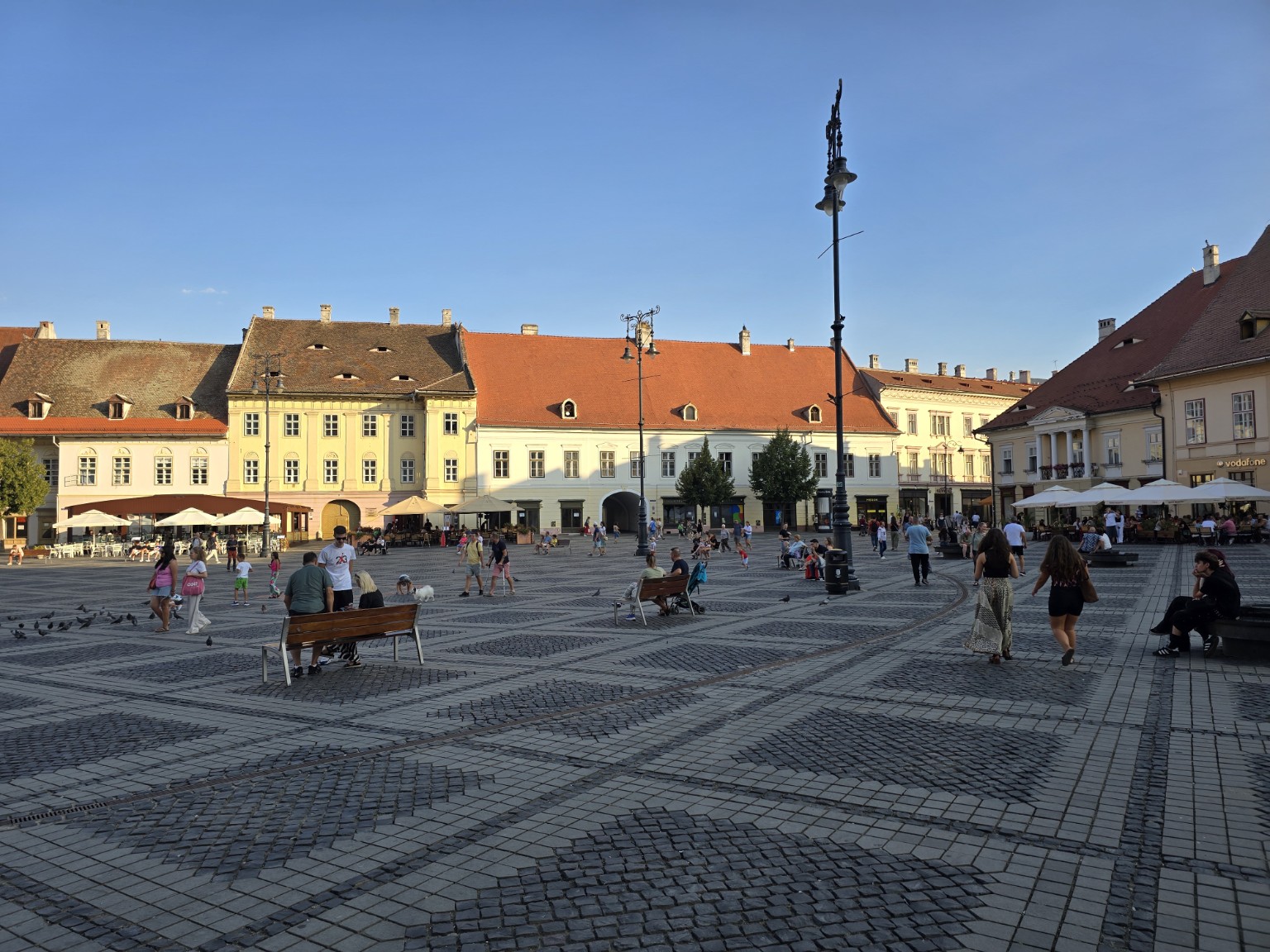
The best things to do in Sibiu are not spread evenly across the city. Most first-time sightseeing begins in the historic centre, where the main squares, landmark churches, museums, passages and fortification remains sit close enough to form a coherent walk.
The useful question is not “How many Sibiu attractions can I collect?” It is “Which stops change the experience enough to deserve time inside?”
The historic centre: Piața Mare, Piața Mică and Huet Square
Start with the three-square core: Piața Mare, Piața Mică and Huet Square. Official city and county tourism sources treat this connected system of squares as the structural heart of historic Sibiu, and it is the simplest way to understand the old city before you start choosing individual attractions.
Piața Mare is the broad civic centre, framed by major historic buildings and Brukenthal Palace. It is also one of the places where Sibiu’s cultural calendar becomes visible, so the square can feel very different on a quiet morning and during a major event.
From there, move through the passage beneath the Council Tower into Piața Mică. The Small Square has a more enclosed feel, with arcaded buildings and the Bridge of Lies at the edge of the Upper–Lower Town connection. The bridge is a quick stop rather than a reason to build an hour around it; the stories attached to it belong to local legend, while the more useful travel role is spatial — it helps you see how the old city changes level.
Then continue into Huet Square, dominated by the Evangelical Cathedral of St. Mary. The lanes and stair passages around this part of the centre are where Sibiu starts to feel less like a set of individual monuments and more like a connected medieval city.
Do not skip the Lower Town. Walking down and back up through the passage and street network gives context to the more formal Upper Town and makes the city’s fortification logic much easier to read.
Towers, churches and museums worth your time
Choose interiors by interest rather than assuming every landmark needs a ticketed visit.
Brukenthal National Museum is the obvious choice for art and museum-focused travelers. It is also worth knowing that “Brukenthal” is not just one room or one building: the institution operates several museum locations in Sibiu. For a first visit, Brukenthal Palace and the European Art Galleries in Piața Mare are the clearest place to start, then add another branch only if its collection matches your interests.
The Evangelical Cathedral of St. Mary in Huet Square is one of the defining vertical landmarks of the old city. Its Gothic architecture, interior and tower/viewpoint make it a meaningful stop when current visitor access allows. Check the cathedral’s own current visitor information before building a fixed schedule around the tower.
Holy Trinity Orthodox Cathedral adds a very different architectural and religious layer a short walk from the main squares. It is worth including even if you do not plan a long interior visit, because Sibiu’s historic centre is not defined by one single religious tradition.
The fortification walls and guild towers around Cetății Street work well as an outdoor continuation of the old-town walk. They add context without requiring another large museum block.
One current caveat matters: the Council Tower is listed by the official Sibiu County tourism site as closed for rehabilitation at the time of this research. Many older guides still present the climb as a normal part of a Sibiu visit, so check the current official status rather than assuming access.
ASTRA Museum and Dumbrava
ASTRA Museum deserves to be treated as a major Sibiu attraction, not as a small add-on and not as a separate day trip.
The Open Air Museum sits in Dumbrava Sibiului, away from the central-square walking circuit. Its outdoor setting, traditional buildings, installations and ethnographic landscape make it a very different experience from the museums of the historic centre. That difference is exactly why it deserves its own block of the trip rather than being squeezed between two old-town interiors.
For planning purposes, the key decision is simple:
- if you have only one day and your priority is historic Sibiu, keep the day centered on the old city;
- if you have a second day or a strong interest in Romanian rural culture and vernacular architecture, ASTRA becomes one of the strongest reasons to extend the stay.
Tursib currently serves the museum as part of the local public-transport network, but routes and timetables can change. Use the live Tursib planner for your actual date instead of relying on a route number copied from an older guide.
Where to stay in Sibiu
For a first visit, choose an area before choosing a specific hotel. The best base is the one that reduces unnecessary transport while matching how you want to use the city.
Historic Centre / Upper Town
Stay in or close to the Historic Centre / Upper Town if your priority is maximum access to Piața Mare, Piața Mică, Huet Square, the main museums and evening walks.
This is the most straightforward choice for a first Sibiu trip because the core sightseeing day begins outside your door rather than with a bus or a drive. It also works well when you have limited time and want to return to your accommodation during the day without breaking the route.
The trade-off is that the most central streets can be more affected by events, restaurant activity and visitor traffic. If your dates overlap a festival or Christmas-market period, check the exact location and access conditions of the accommodation rather than assuming every “central” property feels the same.
Lower Town
Choose the Lower Town if you want the historic-city atmosphere but do not need to be directly on the three main squares.
This part of the old city has its own network of cobbled streets and historic buildings and is directly connected to the Upper Town by streets, ramps, stairs and passages. The main practical trade-off is vertical: some sightseeing days will involve walking uphill or using stairs to reach the central squares.
That makes the Lower Town a good fit for travelers who enjoy walking and want the old city around them, but a less automatic choice for anyone with reduced mobility or a strong preference for flat, door-to-attraction access.
We are deliberately not listing “best hotels” here. Accommodation quality, prices and availability change too quickly; the durable decision is the area and its walking trade-offs.
Getting to Sibiu and getting around
Sibiu is accessible by air, rail, intercity coach and road. The right arrival mode depends more on your wider Romania route than on the city itself, because once you reach the historic centre, most first-time sightseeing is walking-first.
Arriving by air, train, bus or car
By air: Sibiu International Airport is connected to the city public-transport network, and the airport and Tursib publish current connection information. Do not plan around a bus number or fixed departure copied months in advance; check the live route information for your arrival time.
By train: Sibiu is served by rail. Use CFR Călători’s live journey planner for the exact date, because connections and journey times vary by origin and timetable period.
By intercity coach: Sibiu County is served by private coach operators. Treat any frequency you see in a travel article as date-sensitive and verify the actual operator before travel.
By car: a car becomes much more valuable when Sibiu is your base for regional routes than when you are walking the old city. If you are driving, check your accommodation’s parking and access arrangements before arrival rather than assuming a historic-centre property includes convenient car access.
The practical rule is: choose the arrival mode for the wider trip, then switch to walking for the historic core whenever that suits your mobility and accommodation.
Getting around the city
For most visitors, central Sibiu is a walking city first.
The Upper Town, Lower Town, the three main squares, major churches, museums and fortification area form a connected historic core. That does not mean every attraction is beside every other one, but it does mean you normally do not need a car to understand the centre.
Use local transport when the destination sits outside that walking core — especially for places such as ASTRA Museum or for airport connections. Tursib publishes the live network and journey-planning information, which is more reliable than hard-coding a timetable into an evergreen guide.
If a future trip is built around public transport and regional excursions rather than just the city, use a dedicated Sibiu Without a Car guide once that resource is available. That is a different planning problem from simply getting around the old town.
Best time to visit Sibiu
The best time to visit Sibiu depends on what you want the city to do for the trip.
Late spring to early autumn works well for a city-first visit when long walking days, outdoor terraces and a fuller cultural calendar matter. The trade-off is that major events can increase visitor pressure and change accommodation availability, so check the event calendar before booking rather than after.
Summer makes sense if festivals and a lively centre are part of the appeal. It is also the season when many travelers start combining Sibiu with mountain routes, but city weather and mountain-road access are separate questions. Never assume that a road such as the Transfăgărășan is open simply because the weather in Sibiu is warm.
Early autumn can be a strong compromise for walking and regional travel, with the usual caveat that daylight shortens and mountain conditions can change quickly.
Winter makes sense if the Christmas atmosphere is part of the reason for choosing Sibiu. The city has an established Christmas-market tradition, but dates are year-specific and should be checked before booking. Winter also narrows some mountain-road options, so a winter Sibiu base produces a different set of realistic day trips from a summer one.
There is no need to pick a “perfect weather month.” Pick the season that matches the city experience and the regional routes you actually intend to use.
Use Sibiu as a base for day trips
Sibiu is a useful base because the routes around it are genuinely different from one another.
You can look toward Saxon towns and villages such as Sighișoara and Biertan, historic destinations such as Corvin Castle and Alba Iulia, nearby options such as Păltiniș or Ocna Sibiului, or seasonal mountain scenery around the Transfăgărășan and Bâlea area.
But a place being reachable from Sibiu does not automatically make it a good day trip. Driving burden, public transport, opening hours, route combinations, weather and seasonal road access can turn two similar-looking map distances into very different days.
That comparison belongs in our dedicated guide, Best Day Trips from Sibiu. It is where we compare the options by real-world fit rather than repeating a list of attractions here.
Plan the rest of your Sibiu trip
Use this hub to decide what kind of planning problem you have next.
Best Day Trips from Sibiu: Which Ones Actually Work in One Day?
Use this when you have extra days in Sibiu and need to choose which excursion is actually worth the total travel burden.
Use the broader Travel Trove Tips hub when you want to browse route-first guides beyond Sibiu.
As the Sibiu cluster grows, this section can add dedicated resources for a 3-day itinerary, car-free planning and specific routes. Those links should appear only when the pages are real and published — never as empty placeholders.
What to recheck before you go
Sibiu’s historic structure changes slowly. Travel logistics do not.
Before you lock the trip, recheck the details that can materially change the day:
- Council Tower access: it is currently listed as closed for rehabilitation; verify the latest official status.
- Museum and cathedral access: opening days, ticketing and tower access can change.
- ASTRA Museum: check the official visitor program and current public-transport connection.
- Local transport: use Tursib’s current route planner for the airport, ASTRA and any other non-central destination.
- Train and coach schedules: verify your exact travel date rather than copying a frequency from a guide.
- Events: festival and Christmas-market dates can affect both the experience and accommodation demand.
- Mountain roads: if your plan includes the Transfăgărășan or Bâlea area, check official road and weather information shortly before travel. Seasonal reopening patterns are not guarantees.
For current practical information, start with the official Sibiu tourism channels, ASTRA Museum, Brukenthal National Museum, Tursib, Sibiu International Airport and CFR Călători. For national-road conditions, use official Romanian traffic/road authorities.
A realistic Sibiu plan is not the one that fits the most pins on a map. It is the one that protects enough time for the city itself, then uses the right transport and the right season for everything beyond it.